💎 Loot Calculator 5e
Plan D&D 5e DMG-style treasure from CR band, individual packets, hoard rolls, magic item table A-I, rarity target, campaign pacing, encounters, sessions, and party split.
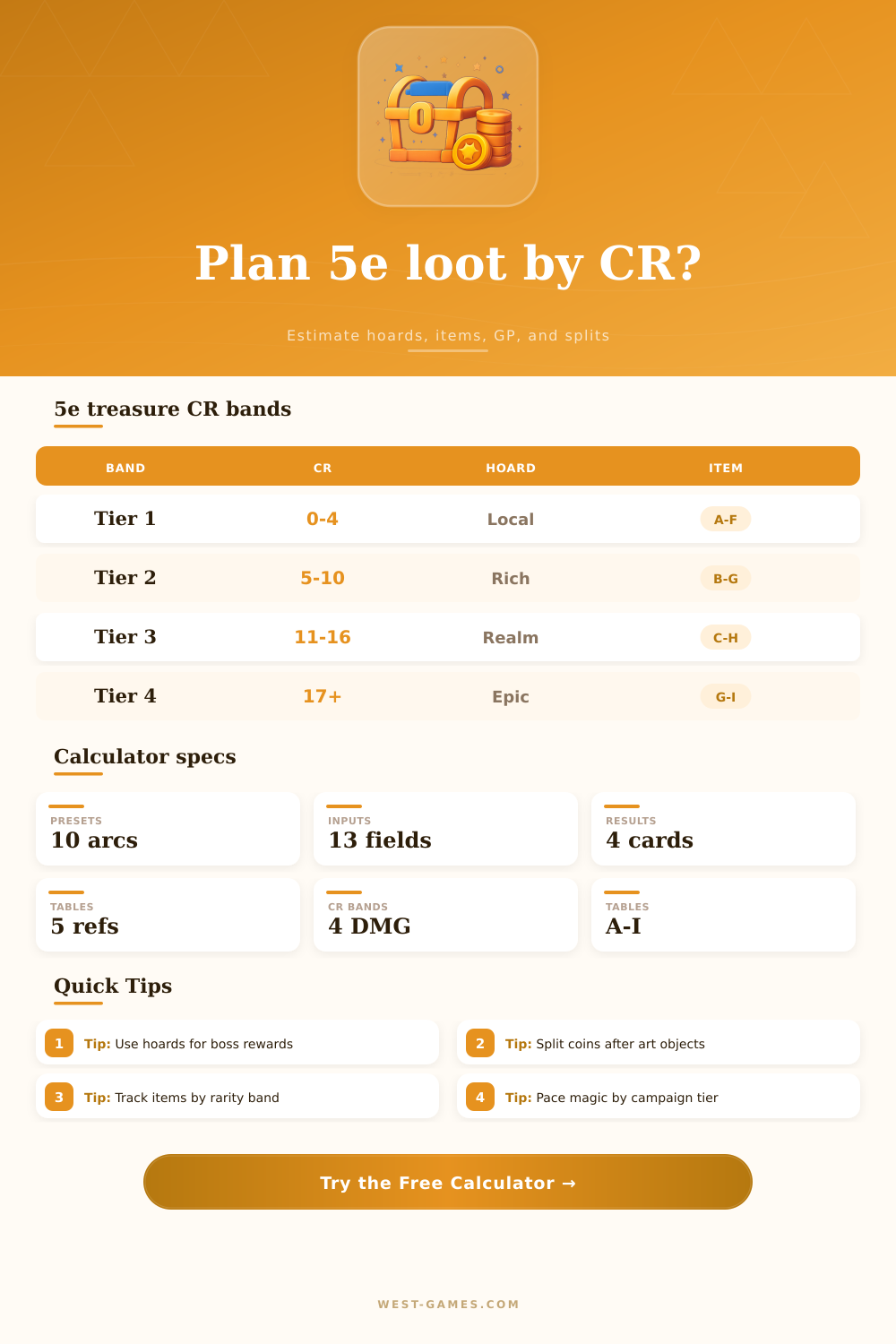
| Band | CR range | Packet GP | Hoard GP |
|---|---|---|---|
| Tier 1 | 0-4 | 7 gp | 210 gp |
| Tier 2 | 5-10 | 28 gp | 3,200 gp |
| Tier 3 | 11-16 | 95 gp | 22,000 gp |
| Tier 4 | 17+ | 350 gp | 86,000 gp |
The values are expected planning baselines for coins, gems, art objects, and trade treasure. Random table rolls can land higher or lower.
| Table | Typical role | Rarity lean | Best use |
|---|---|---|---|
| A-B | Minor treasure | Common/uncommon | Consumables and utility |
| C-E | Stronger minor | Uncommon/rare | Tier 2 and side rewards |
| F-G | Major treasure | Uncommon/rare | Character-defining finds |
| H-I | Epic major | Very rare/legendary | Late campaign hoards |
| Blended | Campaign mix | Tier weighted | Smoothing long arcs |
This calculator estimates rarity bands, not exact magic items. Keep final selection aligned with characters, villains, and campaign tone.
| Pace | Coin factor | Item factor | Table feel |
|---|---|---|---|
| Gritty | 0.70x | 0.60x | Hard choices, few items |
| Standard | 1.00x | 1.00x | Baseline 5e pacing |
| Heroic | 1.25x | 1.30x | Reward-rich adventures |
| High magic | 1.45x | 1.70x | Many magical solutions |
If magic item access is restricted by story, use a generous coin pace with a standard or gritty item pressure.
| Rarity | Ledger value | Party tier signal | Planning note |
|---|---|---|---|
| Common | 50 gp | Any tier | Flavor and small tools |
| Uncommon | 250 gp | Tier 1-2 | Early build support |
| Rare | 2,500 gp | Tier 2-3 | Major arc prize |
| Very rare | 25,000 gp | Tier 3-4 | Campaign-shaping reward |
| Legendary | 100,000 gp | Tier 4 | Mythic capstone |
Ledger values are only used to compare reward pressure across coins and items. They do not imply item shops or guaranteed availability.
| Metric | Formula idea | Inputs used | Meaning |
|---|---|---|---|
| Individual pool | Packets x CR-band packet value | Packets, band, mode, richness | Small treasure found across encounters |
| Hoard pool | Hoards x CR-band hoard value | Hoards, band, mode, richness | Major cache or boss reward value |
| Expected items | Hoard item rolls + minor drip | Hoard count, table, pace, packets | Average magic item count |
| Target rarity | Expected items x table rarity share | Magic table and rarity target | Expected count in one rarity band |
| Per character | Coin-equivalent / split divisor | Party size, sessions, split method | Practical share for each player character |
The breakdown below the results shows the exact assumptions so you can tune treasure without flattening the story into pure math.
You know the type of anxiety that strikes as you open the door into your dungeon and you remember you forgot which treasure to throw in there? You want them to feel rewarded, but you don’t want it to be something so awesome it breaks your economy for the next three sessions.
This is why we developed our loot calculator 5e tool. Let us do the CR band math from DMG so you can worry about telling the story rather than flipping back and forth between books at your table.
Make Loot Fair and Fun
At its heart, this is about blending two very different kinds of loot. The individual treasure packets found in small chests or pockets throughout the adventure keeps things flowing with coin. Meanwhile, the hoards, which are larger prizes, should appears in lairs, vaults, or behind the boss monster. Mix these how you like and use the calculator to do so. You can have a typical campaign rate where most encounters yield individual treasures for low level minions but then go all-in on a massive hoard once group pillages the keep of some adult dragon. This way it always feels like loot has been earned, not simply rolled.
The magic item table focus also trips up a lot of new DMs. It refers to tables A-I in the manual. You should mostly stick to Table F for mid-tier adventures. It provide major uncommon items that is useful without breaking campaign. Pushing too far down towards Tables H/I will provided legendary powers earlier then the stakes deserve.
The calculator tracks rarity target, letting you know at a glance whether number of items you expect is in line with party’s current level. Want more of a high-magic fantasy romp? Turn up magic item pressure slider. Turn up the magic item pressure slider. Want a grittier, lower magic experience? Turn it down again. It’s a little thing, but it completely changes the feel of game.
It’s not just about gold amounts. The tool assumes an average party level based off how many sessions you play and your current party level. It also knows that certain rewards is meant for a level 16 party, while others are appropriate for a level 4 group. Pick one and share equally, or designate a portion to a party fund (which is actualy genius if you’re playing a long campaign). That way you have something all parties can contribute towards major expense such as warships or castles. Otherwise, players end up stockpiling money till the end of the game, the whole point of having it was to eliminate that behavior!
Random rolls can be cruel, we all know that. You drop a holy avenger from nowhere one session, then come back with only copper pieces the next. This planner uses expected value rather than straight die results. This evens out some of those extremes and gives a base level to judge what your players should of reasonably expect to earn within three sessions. Players should no longer defeat a big threat and come home empty handed. Players will trust your world’s economy more if there is consistency.
After characters reach those higher tiers, remember: the gold items are simply flavor text. They are looking for tools that allow them to feel like their build is unique, which is where tracking rarity targets comes into play. Having a rough sense of how much stuff you’ve added gives you something to fall back on if you’re feeling low on morale; you can always add specific boon manually to boost the mood. Those reference tables at the bottom of the page explains the baseline for this nicely, though ultimately it’s up to you as to what you’ll put inside the chest. Let the numbers inform your gut instincts, don’t let them override them. It doesn’t matter what’s in the spreadsheet if it feels right when you open the thing.
But in the end, it’s all about narrative weight, not numerical value. If you’re selling it right, one mundane common dagger might be worth more than a thousand gold pieces if it has some sentimental backstory behind it. And the calculator provides the structure that allows you to make that work without going broke or handing out story-breaking gear. Keep the math clean and leave the magic messy and memorable. You set the stage, they take the loot, and we all go home happy.
That’s what people don’t get. They think it’s about numbers. Really it’s about making sure the adventure moves forward and every player feels seen.