⚒ Wynncraft Crafting Calculator
Plan Wynncraft crafted gear, weapons, consumables, and tools by profession, level bracket, ingredient slots, durability, effectiveness, powder or ingredient bonuses, material tier, stat roll, and estimated crafting XP.
| Profession | Item focus | Base type | Best use |
|---|---|---|---|
| Weaponsmithing | Spears and daggers | Weapon | Melee damage crafts |
| Woodworking | Bows, wands, reliks | Weapon | Spell or ranged damage |
| Armouring | Helmets and chestplates | Armor | Durable combat gear |
| Tailoring | Leggings and boots | Armor | Mobility and sustain gear |
| Jeweling | Rings, bracelets, necklaces | Accessory | Identification stacking |
| Alchemism | Potions | Consumable | Short powerful buffs |
| Scribing | Scrolls | Consumable | Party support effects |
| Cooking | Food | Consumable | Longer passive buffs |
| Bracket | Mid level | Base XP | Pressure |
|---|---|---|---|
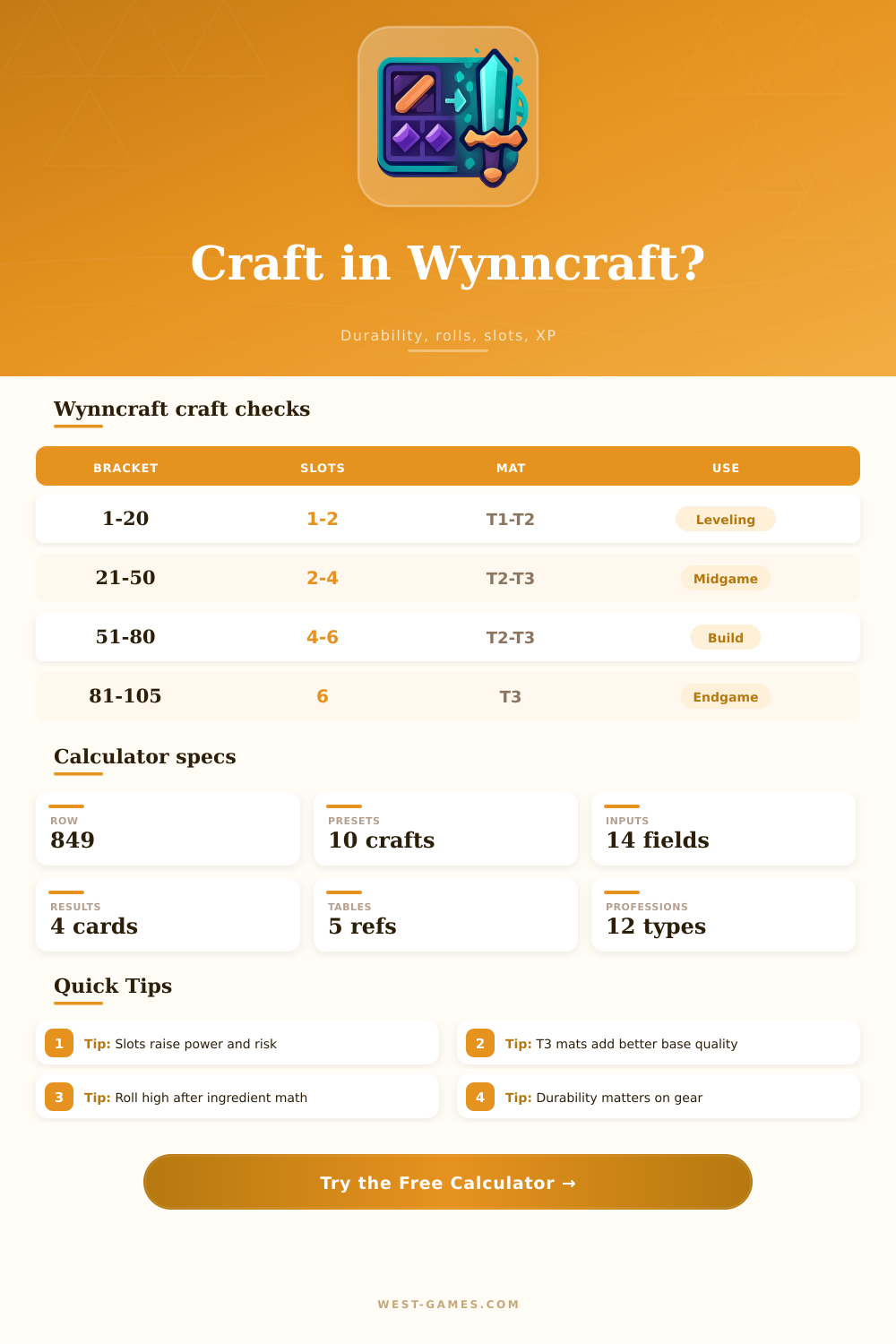
| 1-20 | 10-15 | 60-180 | Low durability pressure |
| 21-50 | 25-45 | 260-900 | Moderate slot pressure |
| 51-80 | 55-75 | 1,200-2,500 | Ingredient quality matters |
| 81-100 | 85-95 | 3,000-4,800 | Durability can break builds |
| 101-105 | 103 | 5,200+ | Endgame optimization |
| Tier | Quality | XP factor | Planning note |
|---|---|---|---|
| Tier 1 | Base | 1.00x | Fast leveling and test crafts |
| Tier 2 | Better | 1.10x | Balanced midgame crafting |
| Tier 3 | Best | 1.22x | Use for final gear or roll fishing |
| Slots | Power | Durability risk | Use case |
|---|---|---|---|
| 0-2 | Light | Low | Profession leveling |
| 3-4 | Medium | Moderate | Usable questing gear |
| 5 | High | High | Focused stat craft |
| 6 | Maximum | Very high | Endgame ingredient stack |
| Roll band | Modeled grade | Expected result | Action |
|---|---|---|---|
| 30-69% | D to C | Weak final identification or low stat line | Use only for leveling or testing |
| 70-89% | B | Playable crafted item with average value | Keep if durability is comfortable |
| 90-109% | A | Strong result for most build plans | Compare against target threshold |
| 110-130% | S | Excellent roll on a good ingredient base | Save for serious build testing |
With a pile of tier three materials that you paid a small fortune for sitting in your safety zone, you stare blankly at the crafting menu as if it will give in before you do. Your heart begins to race and your cursor hovers over the confirm button because you know precisely how many precious gold pieces this one attempt is worth. For every Wynncraft player, this is both their most desired and dreaded moment.
Crafting in this game are not simply an exercise in mindless button pressing until a shiny new item appears. It’s a balance of stats gained, durability lost, and the unforgiving luck of the roll system. You only need to have watched your perfectly rolled weapon shatter on its second use to understand the significance of careful planning. However, you don’t have to guess about whether you should take the chance on that extra slot: the calculator (above) will crunch those numbers for you as soon as you input your ingredients and bracket of choice.
How to Craft Smart in Wynncraft
The core of Wynncraft crafting is this balancing act: more powerful weapons requires better ingredients, but those ingredients also reduce how long said weapon will last before breaking into pieces and requiring repair. New players discover this over time: you can get the highest damage multiplier on the server, but if your weapon shatters after a single boss fight, that power is only theoretical.
Before we get to the ingredients, let’s establish some baselines with material tiers. When you’re crafting grindy profession where the end product doesn’t matter too much, cheaper, more forgiving material is the way to go (tier one). End game gear, on the other hand, sees things getting a lot more serious as soon as you enter tier three.
Yes, these higher-tier materials will give you more XP and have better base quality, but it’ll also increase the standard of what counts as a “failed” craft. It’s not enough that something works; now you need something that competes.
Most folks make mistakes when filling out ingredient slots, and they don’t check their durability cost. This pressure is modeled in tools so you know whether your stat bonus would last. You may have an epic stat roll and look at a fully-sixed six-slot craft using only heavy rare ingredients which looks amazing on paper. But it has a total durability of 50 points and will dissapears within seconds if you intend to take it into raids.
Figuring out what’s being measured here is largely the key. It measures the raw stat, like the amount of damage or defense, as well as how long it lasts before you need to craft something else. Behind the scenes there is maths, and that maths are different depending on which professions you choose. Some professions is more roll-based (e.g. Woodworking & weaponsmithing) whereas others rely on good armor to keep your char alive (e.g. Armoring). Cooking/Alchemism has a different flavour of its own again, where single items aren’t as important than how well you’re able to produce batches.
You can see how those roles work in the reference tables provided with the planner. Then, you can pick the profession that fits your style of play instead of blindly trying things out!
Durability is the silent killer of good intentions. When building, most players are laser-focused on boosting their effectiveness score, which means they overlook negative modifiers of those ingredients. That’s where people go wrong. An item may be super effective, but if it breaks quickly, it will deliver less overall damage during its lifespan as compared to a mediocre item that survives an entire dungeon run. This is why the calculator estimates how long your creation will last based off the modifiers you apply so that you can compare this against effectiveness.
Patience is better than perfection. This applies to leveling up your crafting professions in particular. There’s no need to roll perfectly on everything early on, that just wastes resources and can be frustrating, as the XP isn’t proportional to how much time or effort you put into it. Keep the setup simple (lower tier materials + fewer slots) until you get a feel for the rhythm of all the different professions. Only when you’re comfortable should you begin stacking those rare ingredients for your endgame builds.
You could of done better with more planning. At its core, crafting is a matter of control within an inherently random game. There’s no way to ensure the right die roll, but there are ways to set the stage for more success with less pain when things go wrong. If you approach your ingredient slots like a budget instead of a wishlist, you’ll discover your gold reserves remain healthy and your gear lasts longer. The interface may be daunting at first sight, but learning the connection between power and durability will make these choices much easier. Lastly, keep in mind that each point of stat gain comes with a price tag.