🗡 Tap Titans 2 Skill Tree Calculator
Plan your SP allocation for push walls, relic farming, tournament bursts, and stable mana cycles.
| Engine | Push Bias | Farm Bias | Mana Load | Best Use |
|---|---|---|---|---|
| Heavenly Strike | Very High | Medium | Heavy | Fast wall breaks |
| Clan Ship | High | Medium | Medium | Stable hybrid loops |
| Shadow Clone | Medium | Very High | Light | Idle and overnight farm |
| Pet | High | High | Medium | Tournament bursts |
| Gold Gun | Medium | Very High | Medium | Relic speed cycles |
| Dagger | High | High | Medium Heavy | Hybrid active builds |
| Total SP | Knight | Warlord | Sorcerer | Rogue | Typical Route |
|---|---|---|---|---|---|
| 400 to 800 | 28 to 34% | 18 to 24% | 26 to 33% | 12 to 18% | Early wall push |
| 800 to 1400 | 24 to 31% | 20 to 27% | 27 to 35% | 14 to 20% | Mid hybrid climb |
| 1400 to 2200 | 20 to 29% | 22 to 30% | 28 to 38% | 15 to 24% | Prestige balance |
| 2200 to 3200 | 18 to 27% | 24 to 34% | 30 to 40% | 16 to 26% | Late efficiency |
| Stage Band | Safe Mana Regen | Splash Skip Goal | Prestige Target | Comment |
|---|---|---|---|---|
| 20k to 60k | 6 to 9 /s | 15 to 28 | 6 to 9 min | Focus mana first |
| 60k to 120k | 8 to 12 /s | 25 to 40 | 5 to 8 min | Balance speed and push |
| 120k to 180k | 10 to 14 /s | 35 to 52 | 4.5 to 7 min | Optimize splash uptime |
| 180k plus | 12 to 18 /s | 45 to 70 | 4 to 6 min | Maintain mana buffer |
| Objective | Tree Priority | Best Engine | Execution Window | Risk |
|---|---|---|---|---|
| First hour spike | Knight + Sorcerer | Heavenly Strike | 0 to 60 min | High mana burn |
| Consistent rank climb | Warlord + Sorcerer | Clan Ship | Full event | Medium |
| Fast relic cycling | Rogue + Sorcerer | Shadow Clone | Repeat cycles | Lower push cap |
| Burst finish push | Knight + Rogue | Pet or Dagger | Final 90 min | Execution heavy |
The skill tree in Tap Titans 2 dictate the player’s progression through the game’s stages. The skill tree will determine whether the player is able to break through the stage wall or whether the player will lose their progress. There are four specific tree within the game.
These trees are the Knight tree, the Warlord tree, the Sorcerer tree, and the Rogue tree. Each of these trees provide a different benefit for the player, but each require a specific allocation of skill point to obtain the benefit from the skill tree. The Knight tree provide raw tap damage.
Simple Guide to Skill Trees and Builds
The Warlord tree provides scaling for the players’ companions. The Sorcerer tree provides mana regeneration for the player. Lastly, the Rogue tree provide splash damage for the player to skip wave of their enemies.
When players start the game, they will typically allocate all of their skill point to the Knight tree for defeating the bosses in the game. Past 20,000 stages, however, players will develop a problem with their mana; they will experience mana starvation. Because of this problem with mana, players will need to allocate some of their skill point to the Sorcerer tree.
Many players will make the mistake of ignoring mana altogether when focussing on their damage. This mistake will lead to players hitting a prestige wall in the game. There are many types of build for the game, each of which serve a specific purpose.
For instance, the Heavenly Strike build will allow for players to deal burst of damage; however, they will use up all of their mana. The Clan Ship build provides stability for the player to push stages and complete clan raid. The Shadow Clone build is used for idle play as it uses very little mana and works well for players who wish to collect their relic while they sleep.
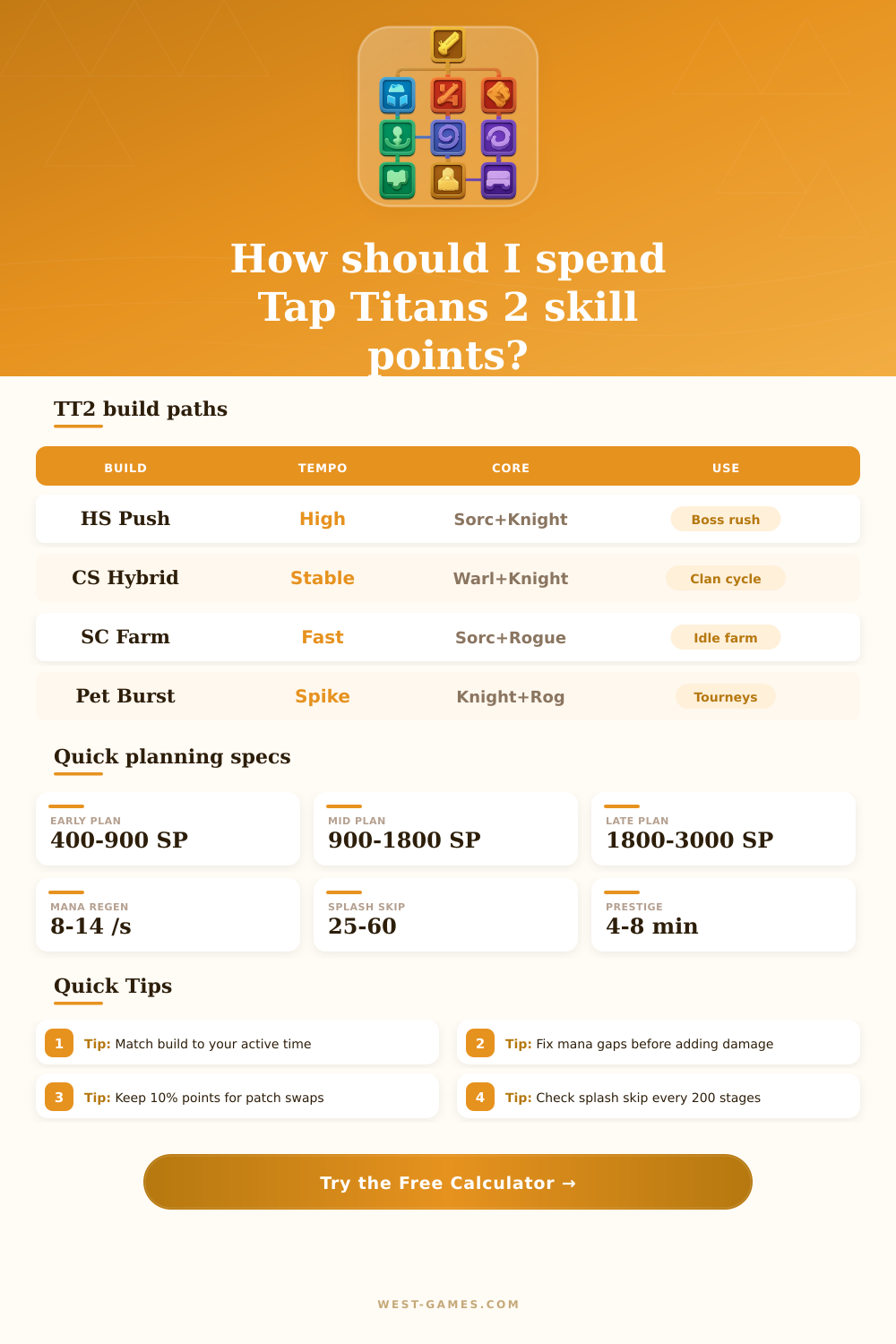
Other build include the Pet build for tournaments and the Dagger build for active play. When players reach 900 skill points, they should begin to shift from damage builds to balanced build. Balanced builds will require players to allocate more skill points to the Warlord tree to gain the benefits of a clan ship and more points to the Rogue tree for splash damage.
As the player begins to climb higher in the game’s stages, their prestige cycle will change. The prestige cycles for players will become shorter as they continue to play the game. For example, players may have a nine-minute prestige cycle in the early games but a four-minute prestige cycle in the late game.
This changing prestige cycle will affect players’ focus on the game’s stages versus relics. For active play, players will focus on their skill points to enable them to push their stages. For players who wish to play the game overnight, they should utilize the Rogue tree.
When players acquire artifacts or mythic set, they will be able to change how many skill points they gain. To maintain mana stability, the player will balance the ratio between the mana supplied to the game and the demand. If the ratio falls below 100 percent, the player’s push score and farm efficiency will decrease.
For players who wish to clear wave of enemies quickly, splash damage is a benefit that they should use. If players do not utilize splash damage, they will have to tap the screen for longer period of time. To compete in tournaments, players will need to allocate skill points into the Knight and Sorcerer trees so that they can deal burst of damage, but they must ensure they do not run out of mana.
Players who wish to focus on pushing their stages will focus on the Warlord tree. For those who want to perform idle play, they should utilize the Shadow Clone and Rogue trees to maximize their efficiency in progressing through the game’s stages. Many players find that they should keep the Knight tree between 20 and 30 percent for optimal result.
A game planner can assist players in understanding the skill trees. Players can enter the level of their pet or the relic multiplier to determine how many stage they will recieve per prestige cycle. Additionally, their farm scores will help them understand their game efficiency.
The percentages indicated within the skill tree planner will display the ratio between their burst damage and their sustain damage. If the player finds that they have a mana gap, they should shift their skill points into the Sorcerer tree. Reference tables will allow players to see the recommended skill points for specific trees in the early and late game.
For example, players should use 28 to 34 percent skill points for the Knight tree in the early game and 30 to 40 percent for the Sorcerer skills in the late game. Players should leave 10 percent of their skill points unallocated to account for possible game patches. Players should also monitor their splash damage every 200 stages to account for new gear in the game.
It is not necessary for players to maximize only a single tree; focusing on only one tree is less efficient than balancing all of the skills. If the player manages their skill points and mana properly, they will be able to break through the stage walls.