Tire Wear Calculator
Estimate racing tire wear from compound, lap count, lap time, track temperature, camber, toe, pressure, driving load, remaining tread, usable life, and lap-time degradation.
| Compound | Base Multiplier | Grip Tradeoff | Typical Stint Use | Model Note |
|---|
| Factor | Neutral Zone | Multiplier Formula | High-Wear Example | What It Means |
|---|
| Preset | Compound | Track Temp | Base Wear | Setup Risk | Driving Load |
|---|
| Wear Band | Grip State | Degradation Share | Pit Planning Use | Calculator Handling |
|---|
There is a slight vibration on the steering wheel. You push too hard into a corner and slide out more farther than you want. Lap times don’t increase right away; instead, they plateau. The difference between a stellar stint and a poor one are your handling of the rubber connecting the tires to the pavement.
Maybe you’ve got the speed demon machine? If so, then what good will it do if the tires falls off before the pit lane is opened? It’s physics combined with strategy and far from instinctive. Most driver view grip as a fixed trait. In reality, it is a diminishing resource. It wears down each time you hit the brakes, turn the wheels, or as heat increase inside the tire itself.
How to Manage Your Tires
Then you input your particular situation (your setup), your track, your conditions, and the calculator does all the hard math for you. You will no longer guess how much your alignment or temperatures will affect things or how different compounds might compare. Those vague variables becomes a real number of laps you can use.
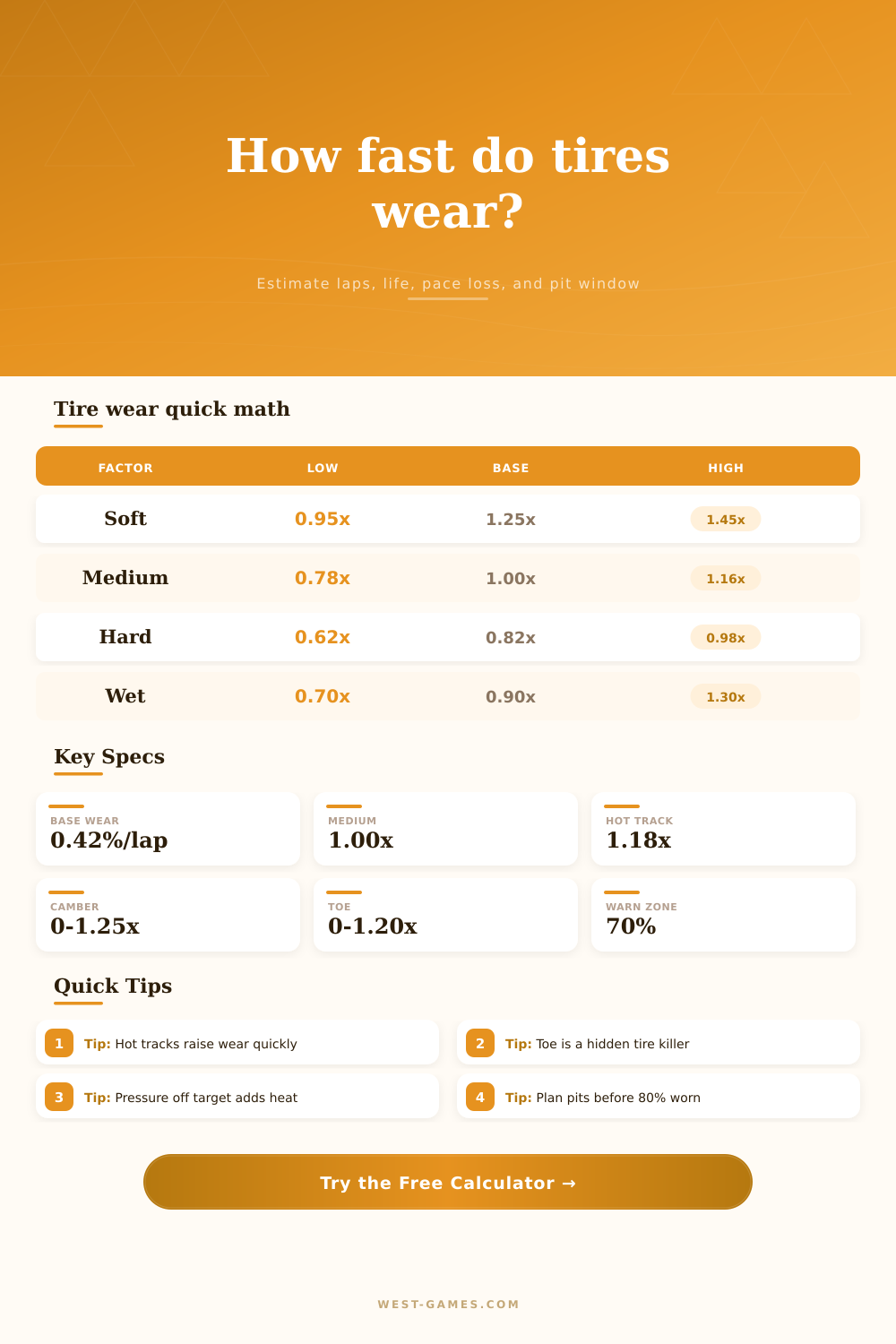
Then you have this base wear figure that becomes foundation of the model and that typically comes out to roughly one-half of a percent per lap with a medium compound under neutral conditions. From there, it gets interesting.
You need to factor in the tire compound itself. Softer tires bite immediately but eat up your tread. Harder compounds last longer but lose initial traction. There is a constant give-and-take between today and tomorrow.
Temperature is a huge factor here. A hot track will cook your tire carcass like an oven; it’ll degrade faster than expected based off compound. The tool accounts for thermal stress on its own and also shows you how much a thirty degree spike could cost your stint.
But then there’s also the car set-up. And that can be half of the story… Or even more. The silent killers of tires is camber and toe. Aggressive camber increases the amount of contact patch on the track when cornering, but it focuses wear to one side of the tire. Toe causes scrub, a constant dragging action that creates heat and shreds rubber at each turn and down each straightaway. It feels subtle, but it add up fast.
There is also pressure which can be overlooked too long. If you run tires too cold, the sidewall will flexes too much. This generates heat and causes them to wear out faster. If they get too hot, you lose the contact patch, which leads to blistering and uneven wear. You can put in the difference from your target pressure into the calculator and it’ll show you exactly where you’re at.
This matters because tire management isn’t just about smooth driving. It is also about understanding how to treat the car gently to keep your tires in their best working range.
Now that you know what they are spitting out, how do you use them? The pace loss metric will tell you when you begin to suffer while the usable tire life figure will tell you when you need to pit. In some cases there’s a range in between those two points. For example, maybe you still have 10 additional laps on your tires but your pace is now down by two seconds. That’s the danger zone the grip cliff concept illuminates.
After a certain point of wear, the deterioration speed up rather than following a straight line. It doesn’t merely slow down a bit; it slows down and goes haywire.
All of this alters your perspective for a weekend at the track. Rather than wondering “how long should I box”, you now have data that will tell you exactly what happens and how much longer you’ll be able to run. Before you go out to the track, you’ll know how a slight change in toe might extend your stint by maybe an extra three laps. That’s the difference between winning races. Sometimes it isn’t even about going fastest one lap; it’s about going fastest over the course of the race which is the definition of a championship.
All in all, it’s a conversation between the engineer, driver, and environment about tire wear. What you get, you don’t get to choose; the compound supplied, the track temp, those are things you can’t control. But what you do control is your response to them. The more you learn about what causes the degradation, the more you take something which was a mystery variable and make it a manageable resource.
Your goal shouldn’t of be to save these tires as best as possible. It’s to work the tires effectively. You want the rubber to work for you, not against you.
Next time you feel that shudder, you’ll be able to tell precisely where it came from and precisely what to do about it.