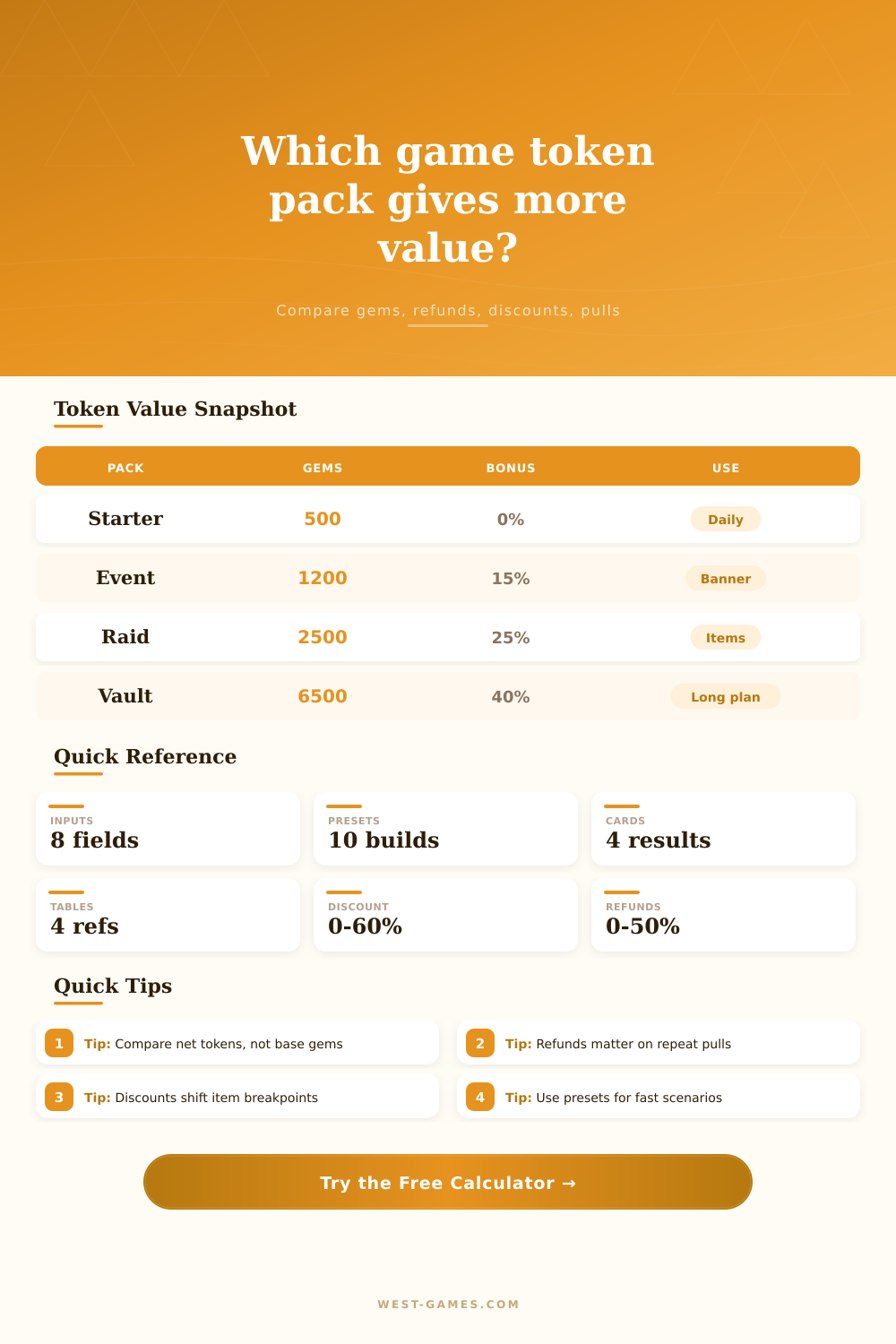
There’s nothing worse than being on the fence about whether or not a game bundle is worth it and staring blankly at a screen for 10 minutes trying to figure it out. There is some good-looking base gems, plus bonus currency, event discounts, duplicates returned, vague promises of additional pulls, etc. It starts to feel like mental gymnastics with no mat in sight.
Having a simple system to determine real-world value make this much easier. Enter the calculator above that does all the work for you, helping you plan instead of guess.
Why You Need a Gem Calculator
I think headline number is what most players focus on, and it’s typically misleading. Two thousand gems sound like a bad deal versus five thousand, for instance, but that doesn’t consider basic mechanics involved in spending those gems. How many item will it purchase? What’s my chance of pulling something I don’t already have? Those are the questions it answers.
It considers your estimated duplicate rate and then refines it based off the rebate given when you pull a duplicate (which becomes a shard or some other secondary currency). That’s what most people gloss over. If games gives back some of the value when you pull duplicates, you’re not losing everything. Forgetting that rebate makes these pricey packs seem much more costly then they truly are.
For instance, consider spending on pulls vs. Spending on items. Pulls tend to be more expensive per unit with some randomization. Spending money on them mean less of it going toward each pull compared to spending on items. Items has a flat cost. Spending $5 on an item discounts its price by the same amount. Your gems go much farther.
How far? That’s where the calculator comes into play. You’re able to plug in the two scenarios next to one another. How many times will you be able to summon? how many target items do you want? Seeing this comparison puts efficiency into perspective in a way that raw numbers can not.
This removes some of the friction from having to type everything out yourself. When you look at same set of values over time, whether it’s a long term vault plan or a day’s worth of logins, the preset options will load in realistic values for those types of situations. You’ll have low bonuses and little refund on a day’s worth of stashes. But maybe you’re saving up tokens for a raid chest where duplicate protection is high and token reward is large. These presets provides you with a starting point. Then you can adjust the inputs as necessary to fit your unique situation. Perhaps your favorite banner duplicates more often than normal. Moving that slider around adjusts net value accordingly.
The other mental trick I got caught up in was breakpoint thinking: the idea that breaking the 40-gem barrier before buying something feels worse than breaking the 99-gem barrier, despite the fact that the latter cost less per pack. With the calculator you can actualy see these numbers. Pulls per pack, items per pack (as real results). Is your spending bringing you to next full unit? Or are you just missing out on one gem? Turns out that last part realy does matter; it’s the difference between needing to pick up an additional small top-up later down the line.
Next is coverage of goals. How many packs do I need to reach my goal of a particular weapon/hero? To calculate this, the tool divides net token value by cost of your goal, taking into account your bonuses and refunds along the way. In other words, it keeps you from over-estimating how fast you are progressing. Too many people burn through early resources too quickly because they imagine that their base values will last in an environment with inflation-like game mechanics.
Each archetype has its own context, which the app’s reference tables also help clarify. The starter bundles might be small and efficient, but they come at an up-front cost. The vault packs, while large, will take a big chunk out of your pocket to begin with. Understanding what sort of pack you’re purchasing will allow you to set realistic expectations when it comes to returns.
More gems isn’t everything; it’s about using the gems you already have, just in a better way. All of this come down to discipline when managing your premium currencies. How can you get most value from each gem or coin you spend? Where do cost, discount, refund all fit together in a way that shifts you from mindless spending to thoughtful allocation? It’s not as scary when the math is spelled out for you in plain sight.
Focus on the true return instead of going after the splashiest headline numbers. This is how you play smarter.