Loot Box Expected Value Calculator
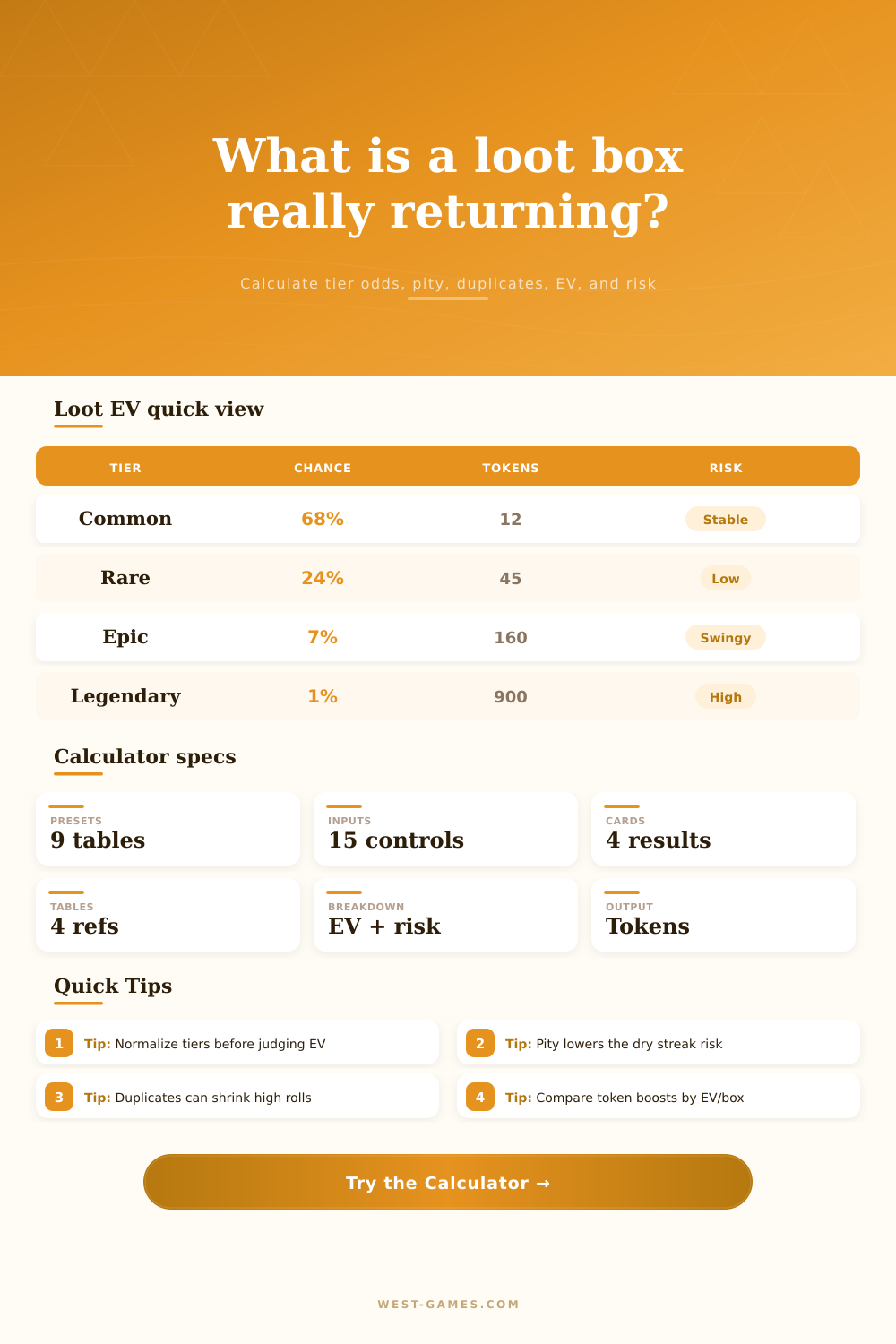
Estimate expected in-game token value from tier probabilities, duplicate conversion, pity behavior, target odds, and variance across a planned opening session.
How it works: probabilities are normalized to 100%, pity is simulated for each box, duplicate conversion reduces duplicate item value into tokens, and variance estimates how swingy the session can feel.
EV Breakdown
Risk Meter
Current Plan
Uses your active probabilities, duplicate conversion, bonus tokens, and pity counter.
No Pity
Removes the pity guarantee so you can isolate how much the pity system adds.
No Duplicates
Models every item as new, helpful for early collection or fresh account planning.
High Duplicate
Uses a heavier duplicate estimate to show how collection saturation changes EV.
| Tier | Normalized chance | Adjusted value | EV per box |
|---|
Adjusted value blends non-duplicate item value and duplicate token conversion.
| Boxes opened | Target odds | Expected hits | Zero-hit risk |
|---|
Target odds include pity when the selected guarantee can award the target group.
| Band | In-game units | Reading | Use |
|---|
Variance uses tier outcomes, duplicate outcomes, flat bonus tokens, and pity schedule.
| Event | Box number | Forced group | EV effect |
|---|
Pity events reset the counter after the forced result is awarded.
| Preset | Typical target | Pity style | Planning note |
|---|---|---|---|
| Hero Banner | Legendary | Long legendary pity | Strong for chase pulls, but duplicates can reduce token EV. |
| Skin Capsule | Epic-plus | Epic-plus pity | Better mid-tier consistency with fewer dry streaks. |
| Event Grab Bag | Rare-plus | Short rare-plus pity | Stable token return with less top-end variance. |
| Ultra Rare Chase | Legendary | Long legendary pity | High swing profile; compare risk range before opening many boxes. |
| No Pity Pool | Rare-plus | None | EV can look fine while zero-hit risk stays high. |
You have enough currency for another pull. There is a button under your thumb. You hold out for that one legendary hero, or skin wrapped up in its shiny golden wrapper. You click and watch the animation but it is nothing more than another common item.
This experience isn’t all down to bad luck, that instant disappointment are usually due to a misunderstanding of how probability feels in your head compared to how it actualy behaves in practice. The majority of player population glances over the headline odds for the rarer tier and stops there. One percent. I’ve got a one in hundred shot. But it’s not as simple than that one percentage.
Understanding Loot Box Odds
What about missing? What if you does this repeatedly? How does getting duplicates shrink your actual reward? Does the pity system really save you anything but delay your frustration? While this doesn’t replace running individual pulls, it do run an average over all of the draws in a session. So instead of just one draw, you’re pulling a planned number of box and it will simulate all those pulls at once. It will factor in pity triggers and duplicate conversion rates during calculation.
Variance is a quiet killer to bankrolls. While two loot tables may looks the same on paper with the same expected value they feel like night and day. One will reward you with consistent mid-tiers, keeping you afloat. The other will swing from massive payouts to brutal dry spells it drains you of any motivation before you reach guaranteed drops.
The other variable that most player forget about until they’re already screwed is duplicate rates. At the beginning of a game, each pull seem like a discovery. As you fill up your collection, however, those rare items no longer represent something new; they become currency conversion vehicles. When you recieve a duplicate, the system will only return a fraction of its value. That can have a massive impact on your effective earnings. You can adjust the duplicate rate based off your completion % at any time. It is a small thing, but it make a huge difference for planning out the future.
The value of a pull diminish over time as you acquire more stuff. To soften these rough edges, pity systems forces you into a higher tier after a given number of misses. It lowers the risk that you’ll walk away empty-handed and makes the experience feel more fair. But pity doesn’t alter the average cost. It simply redistributes when you do get your reward. Knowing the difference can help you manage your expectations. Pity isn’t giving you “extra” items. It’s merely preventing the worst case scenario where random chance works against you for too long.
To determine if an event crate or new banner is worth buying, consider not only its expected value but also range of risk. You might be getting a great deal of expected value, but can’t stomach amount of variance needed to achieve it. Are you buying a lottery ticket, where there is a very small chance that your risk will be near 0? Then take a pass. These reference tables on the page illustrates which tiers you’ll see with what confidence after how many pulls.
At the end of the day, however, loot boxes are designed to prey on our lack of ability to understand statistical probability and our drive towards finishing everything. Knowing what you can expect to get on average and being able to measure your risk allows you to move from impulse purchases to informed decisions. Maybe you’ll still spin the wheel because it’s fun! But at least you’ll know exactly what the odds are and what you’re paying for once you strip away all of the bells and whistles.
The animation glow doesn’t last long, the balance sheet does.