Headshot Multiplier Calculator
Model head, body, limb, crit, helmet, armor, weak spot uptime, reload downtime, effective DPS, and time-to-eliminate from one combat profile.
Calculated Combat Output
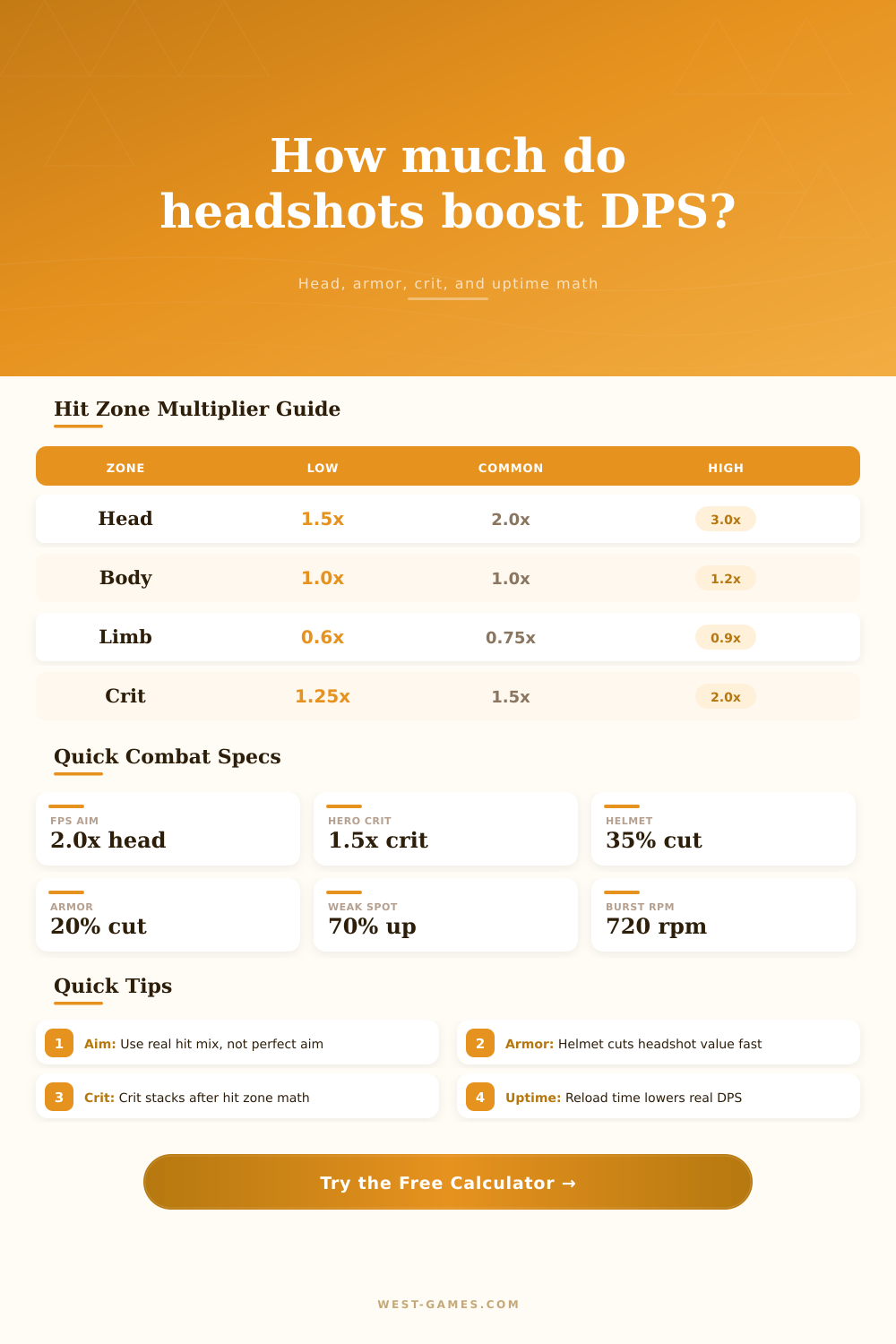
| Hit zone | Typical multiplier | Used for | Calculator impact |
|---|---|---|---|
| Head / weak point | 1.5x to 3.0x | Precision reward, scoped shots, boss cores | Raises average hit if uptime and aim support it |
| Body center mass | 0.9x to 1.2x | Baseline damage, spray control, tracking aim | Forms the comparison floor for headshot value |
| Limb / glancing | 0.5x to 0.9x | Leg hits, arm hits, spread edge pellets | Pulls effective DPS down when hit share rises |
| Critical stack | 1.25x to 2.0x | Perks, talents, status effects, random crits | Multiplies expected damage by crit chance |
| Defense profile | Helmet reduction | Body armor reduction | Practical read |
|---|---|---|---|
| No armor target | 0% | 0% | Pure multiplier comparison; headshots show full value |
| Light helmet | 15% | 10% | Precision still wins, but body shots narrow the gap |
| Heavy helmet | 35% | 20% | Headshot value depends heavily on crit and uptime |
| Boss plating | 50% | 30% | Weak spot windows matter more than raw head multiplier |
| Scenario | Head mix | Defense pressure | Expected behavior |
|---|---|---|---|
| Tactical rifle duel | 28% head | Medium helmet, light armor | Balanced sustained DPS with meaningful precision gain |
| Arena SMG spray | 16% head | Light armor | High RPM helps, but limb share can erase multiplier value |
| Raid boss weak spot | 42% head | Heavy plating | Strong while exposed, much weaker when uptime drops |
| Sniper opening pick | 76% head | Helmet heavy | Huge per-shot value, lower sustained output from RPM |
| Changed input | Low pressure | High pressure | Why it matters |
|---|---|---|---|
| Headshot share | Small gain below 15% | Large gain above 40% | It controls how often the best zone actually applies |
| Weak spot uptime | Stable at 80%+ | Volatile below 45% | Unavailable weak spots convert head attempts into body value |
| Helmet reduction | Minor below 15% | Major above 40% | It directly discounts the head zone before DPS is calculated |
| Reload downtime | Easy below 10% | Severe above 25% | It lowers real DPS even when aim and multipliers are strong |
The reality of a firefight is that the most important number on the box isn’t fire rate or magazine size; it’s the damage per second. The difference between winning a firefight and dying in one often comes down to fractions of damage per second. Theoretical outputs are thrown out the window when you get three bullets into a guy’s head, which reduces his health by 35% (damage reduction from helmets) and two others graze his arm which doesn’t reduce his health as much because his limbs don’t have much effect. This is the reason.
Consider hit zone behavior in combat: Thirty-two points base body damage sound great on a typical tactical rifle, until you remember that’s under ideal circumstances. Most opponents will be wearing some form of protection, moving around, etc., exposing those weak areas only briefly. That means very few shots hits where they should, which is why the calculator (above) combines headshots with limb/body penalties to calculate your real-world damage per minute. It’s a good way to take the rose-tinted glasses off and face up to reality.
Why Real Damage Matters More Than Stats
Most notably, headshots typically have multipliers of two to three times base damage, which is the largest increase in value you’ll see from any hit location. But it dissapears fast if you’re not accurate with your shot, especially if the person’s head is protected. Helmets in particular are devastating for headshot chances. Wearing a heavy helmet greatly reduces amount of head damage you take, changing what looks like a one-shot-kill situation into an extended firefight.
This is why so many loadouts fail: they pursue high-multiplier weapons while forgetting that their own hit distribution won’t support those percentages when taking on armor-clad opponent. Then there are status effects and critical hits to consider as well. If they land and you stack them, which some builds does intentionally, they will multiply the end result even more on top of your initial damage from zones. But relying too much on random crits will bring variance, which can ruin your consistency when you need it most in a clutch situation.
To lay this out plainly, the page has a reference table showing where various defense profiles changes the value of each hit type. Hitting the head isn’t everything; it’s also about whether or not that headshot becomes actualy health lost after mitigation from armor. That means reload time and accuracy play a big role here. If you’re spending twenty percent of your time reloading or missing shots, then even something with an enormous potential DPS ceiling won’t be doing its best work. In terms of overall damage per minute, that’s far more important than nearly anything else.
That little bit makes all the difference when making the choice between a slow-firing, heavy-hitting rifle versus a quick-reloading SMG that requires consistency over volume, while the latter require both precision and patience. Model out the scenario and look at the distribution of hits honestly: You might be saying I get an eighty percent headshot rate when I’m spraying from twenty meters out which isn’t realistic. In most sustained firefights a lot of people hover somewhere between the thirty percent mark for headshots while most hits lands on limbs/body. Often limb hits have multipliers lower than one so they actualy punish inaccurate aim instead of rewarding it. Sometimes improving your spray control with hip-fire will reward you more then chasing unobtainable flick shots.
Effective DPS informs which tool is best suited for a given situation. For example, if you’re up against a well-armored opponent, perhaps a marksman rifle make sense since its high base damage penetrates defenses better, even with fewer headshots. Alternatively, SMGs excels at close range combat. Where armor is less common and encounters are more fast-paced.
It’s not about squeezing every possible stat out of each gun, but rather about aligning your weapon’s strengths with your actual performance capabilities. This knowledge shifts the way you engage. You no longer think “this weapon is underwhelming for how much damage it does,” but instead recognize the arithmetic of your misses. What was guesswork becomes strategy: anticipating results prior to firing.
When you go into your next game, know this: while peak performance will never equal consistency, reliable body shots will often beat rare perfect headshots over time. You should of modeled that out before.