⚔️ D&D Loot Calculator
Generate balanced treasure for any party size, level, and encounter type
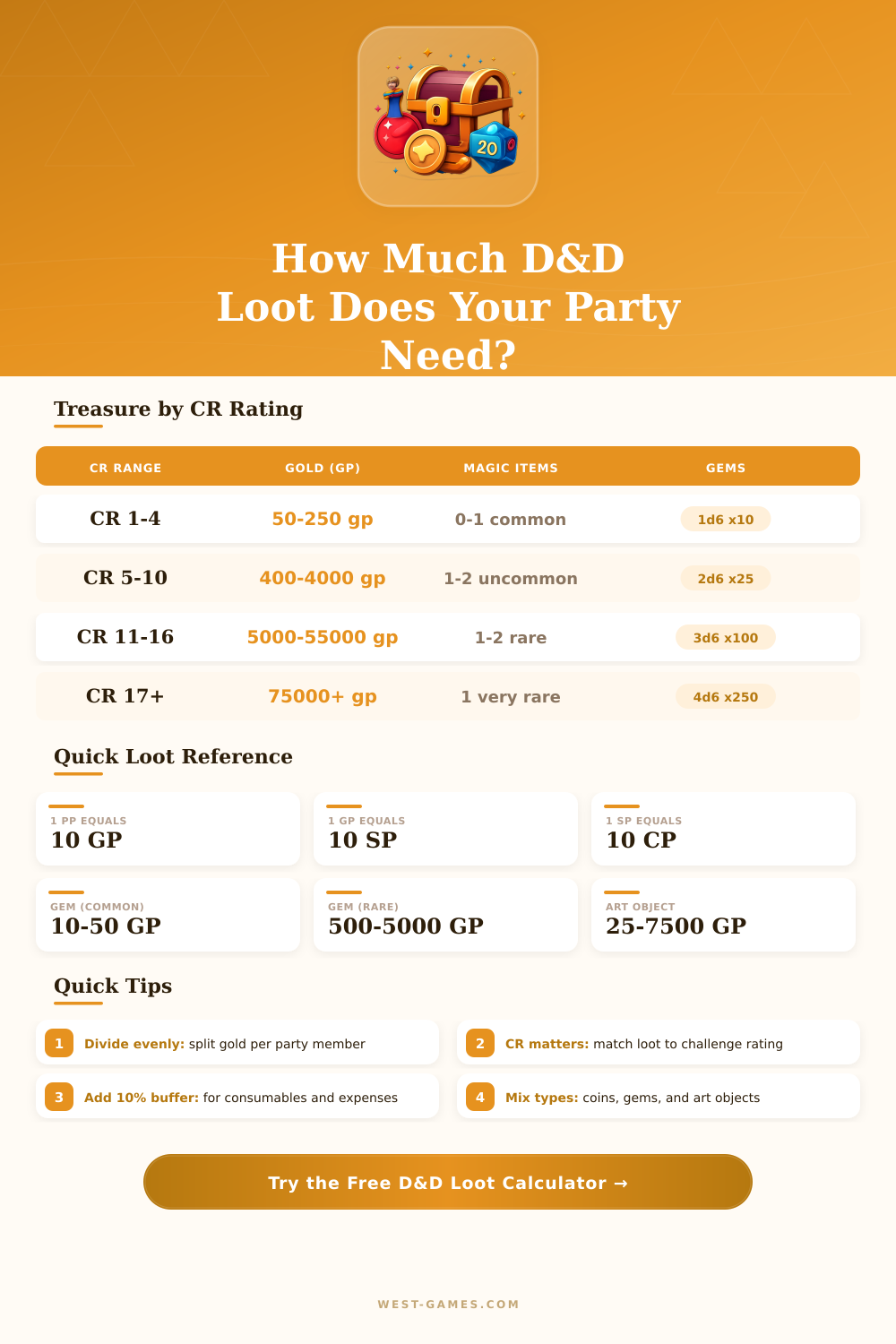
| CR Range | Coins (GP) | Gems / Art | Magic Items | XP Value |
|---|---|---|---|---|
| CR 0–4 | 50–250 gp | 10–50 gp gems | 0–1 Common | 10–1,100 |
| CR 5–8 | 400–4,000 gp | 25–250 gp gems | 1–2 Uncommon | 1,800–3,900 |
| CR 9–12 | 4,000–20,000 gp | 250–750 gp gems | 1–2 Rare | 5,000–8,400 |
| CR 13–16 | 20,000–55,000 gp | 250–5,000 gp gems | 1–2 Very Rare | 10,000–15,000 |
| CR 17–20 | 55,000–200,000 gp | 500–7,500 gp art | 1 Legendary | 18,000–25,000 |
| CR 21+ | 200,000+ gp | 1,000–7,500 gp art | 1–2 Legendary | 33,000+ |
| Value Tier | GP Value | Gem Examples | Art Object Examples |
|---|---|---|---|
| Tier 1 | 10 gp | Azurite, Malachite, Obsidian | Small silver mirror |
| Tier 2 | 50 gp | Bloodstone, Carnelian, Jasper | Carved bone statuette |
| Tier 3 | 100 gp | Amber, Amethyst, Jade | Gold ring with bloodstone |
| Tier 4 | 500 gp | Alexandrite, Aquamarine, Garnet | Embroidered silk tapestry |
| Tier 5 | 1,000 gp | Black pearl, Blue spinel, Topaz | Obsidian statuette with inlay |
| Tier 6 | 5,000 gp | Diamond, Emerald, Ruby, Sapphire | Platinum necklace with gems |
| Character Level | Appropriate Rarity | Attunement Slots | GP Value (approx.) |
|---|---|---|---|
| 1–4 | Common | 0–1 attuned | 50–100 gp |
| 5–8 | Uncommon | 1–2 attuned | 101–500 gp |
| 9–12 | Rare | 2–3 attuned | 501–5,000 gp |
| 13–16 | Very Rare | 3 attuned | 5,001–50,000 gp |
| 17–20 | Legendary | 3 attuned | 50,001+ gp |
At some point during your Dungeons and Dragons campaign, math goes awry. You’re looking for a way to track your progress, you’ve plundered the bandit camp and now you’d like to pillage the goblin lair, and everything looks off. Despite having epic magic items worth more then the yearly budget of a kingdom, they’re still paying copper for their rations. Welcome to the age-old issue of D&D inflation.
Most commonly, this occurs because people don’t fully grasp how treasure function within the game economy. In fifth edition, treasure isn’t a means of scoring points; it’s a resource management mechanic pretending to be an adventure reward. And that’s how you should approach it: as a reward. Handing out gold is a purchase of time. You’re trading it for spell components and healing potions that enables your characters to remain viable between sessions.
How to Balance Treasure in D&D
Why does the amount matter? Because if you don’t provide enough, then the game feel grindy and punitive. If you overcompensate by giving them too much, then their choices cease to be interesting in terms of money because everything becomes free. That’s why balance is so delicate. This is the reason most new Dungeon Masters has trouble finding it without spending hours flipping through rulebooks.
That’s where tool on this page comes in: it takes all that guesswork out of the equation by grounding rewards in your encounter’s Challenge Rating, not some vague sense of fairness. CR is tied to effort. A high-level group will barely break a sweat against a low-CR foe and thus shouldn’t expect much in return. However, if they’re struggling through a boss fight, they’re burning hit points and spell slots, so they should of expect something matching to offset the danger involved.
Just input your party number and encounter type into the calculator above. Let it do the rest. You won’t have to fiddle with wealth progression tables or XP cost adjustments per session anymore.
The other thing that people often miss: what kind of hoard are you carrying? If I were to grab a bunch of gold coins today, how much would they weigh? About a pound for every ten pieces. Ten pieces weigh roughly a pound. Now multiply that by thousands. It’s a lot of weight for your character, especially if he or she is maxed out on inventory space. The problem is logistical: carrying around all those coins is heavy and bulky, which means it becomes a nightmare to lug them all around.
To account for this, the table on the page shows coin amounts next to art objects and gems. Because gems don’t count towards inventory space, they’re far more efficient at doling out big rewards. As players rise through levels, shifting the payout from coins into gems will help keep their wallets full while avoiding the burden of dragging tons of metal around.
The other wrinkle is about magic items. These aren’t worth anywhere near what their gold values imply, they’re worth exponentially more. For example, a +1 sword costs a couple of hundred gold to create but, for a front line fighter, has practically limitless use over a steel sword he’d be carrying instead. There’s also an option to turn on and off the chance of getting magical equipment which helps ensure those sweet bonuses happen at the right times. Too often you get them and magic becomes boring, just like regular gear; too rarely and you start feeling your build isn’t progressing.
These numbers can be helpful, but keep in mind how fast or slow you want your campaign to go as well. Because this is a relatively common type of adventuring pace, the average session reward are meant for a three-to-four session cycle between major milestones. So if your players tend to travel far afield, or meet once a week, you may have to skew towards higher number here. On the flip side, if you’re running a shorter session format or more fight-heavy adventure, you can scale things down without going crazy with the coinage. We included an adventure wealth slider in the tool so you can dial it up for a high-fantasy power fantasy campaign or down for a grittier survival horror one.
To conclude. Players shouldn’t notice a well distributed economy. It runs smoothly. They don’t sit back and wonder if they are getting ripped off. Am I being paid too little? Instead, they feel prepared for whatever comes next. They might buy a sweet new suit of armor or enough supplies for a month-long trek across the desert.
Rewarding them based off the difficulty of an encounter and balancing coins with other lighter items such as gems keeps things economically sane while still driving the adventure forward. It isn’t about stuffing their pockets full. It’s about powering there adventure.